
The Biology of Breast Cancer Initiation
Breast Cancer susceptibility genes in Ductal Carcinoma In Situ (DCIS) progression
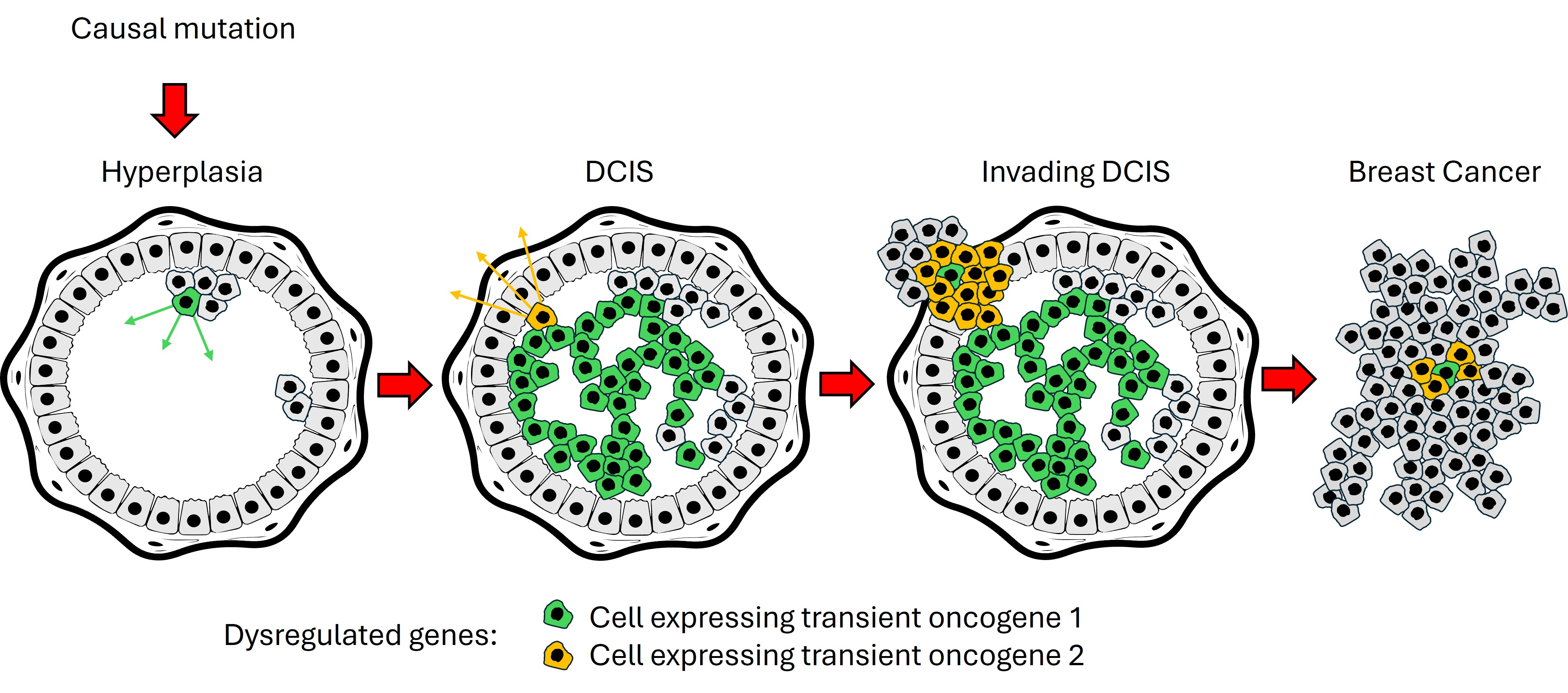
Overview
This project focuses on the earliest stages of breast cancer development, particularly the premalignant stage known as Ductal Carcinoma In Situ (DCIS). Although most DCIS lesions never progress to invasive disease, current clinical practice cannot reliably distinguish indolent lesions from those with malignant potential. We seek to uncover the molecular mechanisms that enable rare populations of premalignant cells to survive, adapt to stressful microenvironments, and initiate breast cancer.
We are particularly interested in breast cancer susceptibility genes identified through genome-wide association studies (GWAS), many of which remain poorly characterized despite their strong links to disease risk. Rather than acting as classical oncogenes, we hypothesize that some of these genes are activated only transiently in rare premalignant cells, inducing persistent changes in metabolism, stress tolerance, and cell fate that promote cancer initiation.
To address these questions, we combine bioinformatic analyses with molecular studies of human DCIS specimens, organoid cultures, and genetically engineered mouse models. Our goal is to identify the cellular states and molecular pathways that determine whether premalignant lesions remain benign or progress to invasive breast cancer.
Ultimately, this work aims to improve early diagnosis, reduce overtreatment of DCIS, and identify new strategies for breast cancer prevention.