
LncRNA Regulators of Transcriptional Plasticity and Treatment Resistance
While tamoxifen is effective in treating ER+ breast cancer, resistance, either intrinsic or acquired, remains a major clinical challenge. We aim to identify lncRNAs crucial for tamoxifen-resistance development that will lead to new RNA therapeutics.
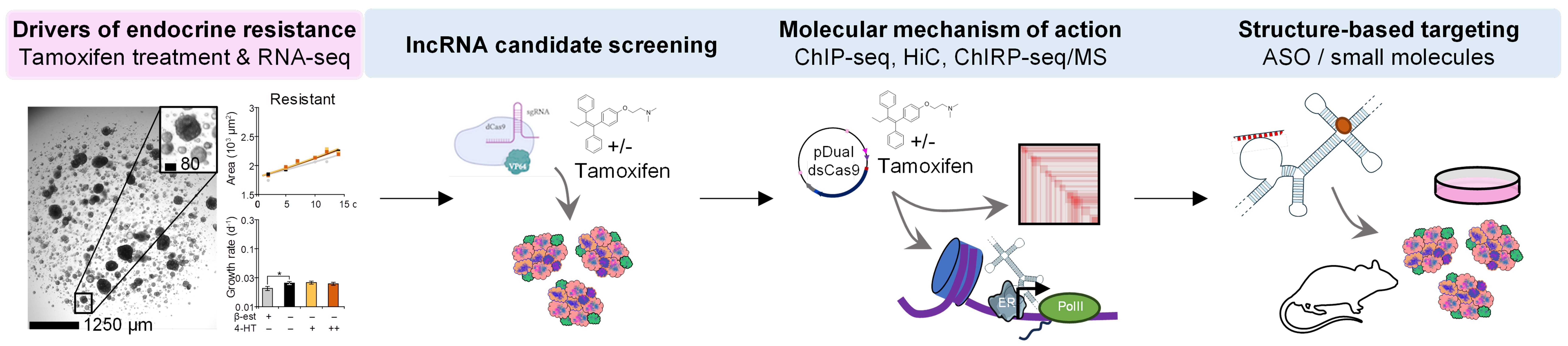
Overview
The gold standard treatment for ER+ breast cancer is surgery followed by radiation and endocrine therapy, which blocks ER activation with selective estrogen receptor modulators–degraders (such as tamoxifen or fulvestrant) or aromatase inhibitors. Unfortunately, 40-50% of ER+ cases have or gain resistance to existing therapies, leading to disease recurrence and distant metastases after 10 years or more. LncRNAs have been implicated in resistance, but most studies rely on long-passaged tamoxifen-resistant cell lines, which lack the cellular complexity of primary tumors. In line with patient-centered research, we obtained RNA-seq from zero-passage patient-derived organoids, which retain more of the original heterogeneity, and identified lncRNAs potentially involved in intrinsic and acquired resistance development. The overall goal is to obtain mechanistic and biological insight into how lncRNA expression and structure are altered in breast cancer upon standard-of-care treatment. The differentially expressed lncRNAs may drive drug resistance, secondarily reflect other drug-driven changes, or coincide with cells that survive the treatment and continue to proliferate. We hypothesize that a subset of these lncRNAs regulates endocrine treatment resistance through direct roles in estrogen signaling and chromatin remodeling. Identifying lncRNAs crucial for resistance development will lead to new therapeutic targets after the lncRNAs have been structurally and functionally characterized.